


 English
 русский
 Español
 中文简体
中文简体

Industry News
What Is Cotton Blend Material? Types, Properties & How to Choose
2026-05-09
Content
Pick up almost any garment tag today and you'll likely see a fiber composition like "60% cotton, 40% polyester" or "95% cotton, 5% elastane." These are cotton blend materials — and they now account for the majority of fabrics used in global apparel and home textile production. Understanding what makes them different, how they perform, and which blend suits your application is the foundation of smarter material sourcing.
What Is Cotton Blend Material?
Cotton blend material is any textile in which cotton fibers are combined with one or more additional fibers — either synthetic (such as polyester or elastane) or natural (such as linen or lyocell) — during the spinning or weaving stage. The goal is straightforward: retain cotton's inherent comfort while compensating for its known limitations, including shrinkage, wrinkling, and limited stretch.
At the fiber level, blending happens primarily during yarn formation. Cotton staple fibers are drafted and twisted together with the secondary fiber in controlled ratios. The resulting yarn carries the characteristics of both components in proportions that reflect the blend percentage. According to USDA cotton fiber testing and grading standards, key parameters such as fiber length, strength, and uniformity directly influence how well cotton integrates with other fibers in a blend — making raw material quality a critical starting point for any blended fabric. To understand how natural and synthetic fibers differ in structure and performance, it helps to examine each component before the blend is formed.
Common Types of Cotton Blend Fabrics
Not all cotton blends behave the same way. The secondary fiber — and its proportion in the mix — determines the final fabric's personality entirely.
Cotton-Polyester (Poly-Cotton): The most widely used blend globally. Polyester adds durability, wrinkle resistance, and dimensional stability, while cotton contributes softness and breathability. Common ratios range from 50/50 to 65/35 (cotton/polyester). Ideal for T-shirts, workwear, and institutional textiles where easy care matters most.
Cotton-Elastane (Cotton-Spandex): Typically 95–98% cotton with just 2–5% elastane. That small elastane fraction transforms an otherwise rigid fabric into one with four-way stretch and strong shape recovery. Essential for fitted apparel, jeans, leggings, and any garment that needs to move with the body.
Cotton-Rayon / Cotton-Modal / Cotton-Lyocell: Blends with cellulosic regenerated fibers produce a notably soft, fluid drape that pure cotton cannot replicate. Micromodal cotton blends prized for their softness and breathability are especially popular in premium loungewear and underwear categories, where skin comfort is the primary requirement.
Cotton-Linen: Combines cotton's softness with linen's structure and natural luster. The result is a breathable, slightly textured fabric well suited to summer shirting, trousers, and light home furnishings.
Cotton-Wool: A functional blend for cooler-climate garments. Cotton improves wool's washability and reduces itchiness; wool contributes thermal regulation and natural moisture management.
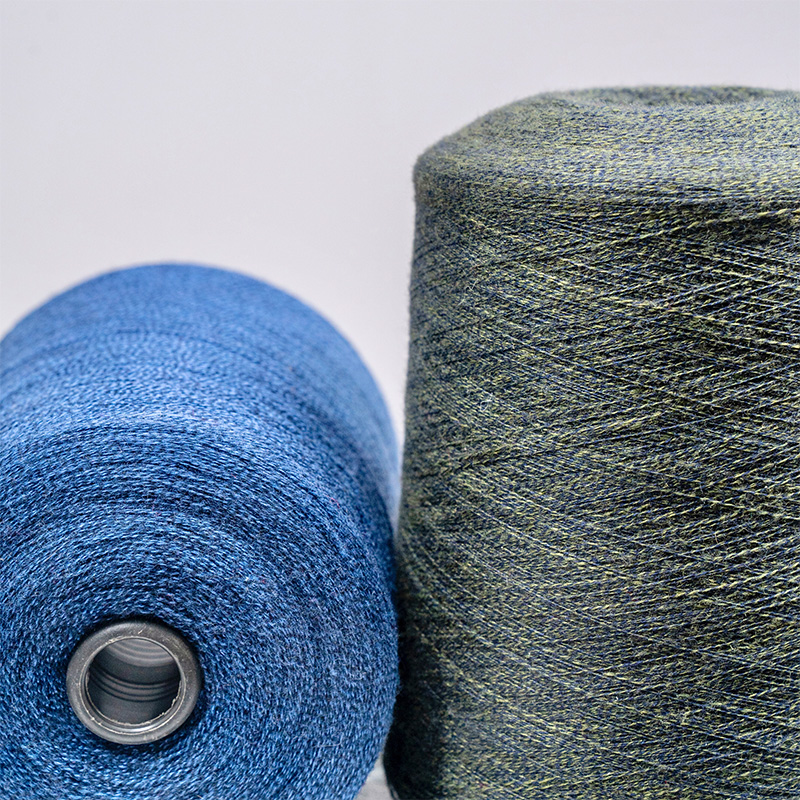
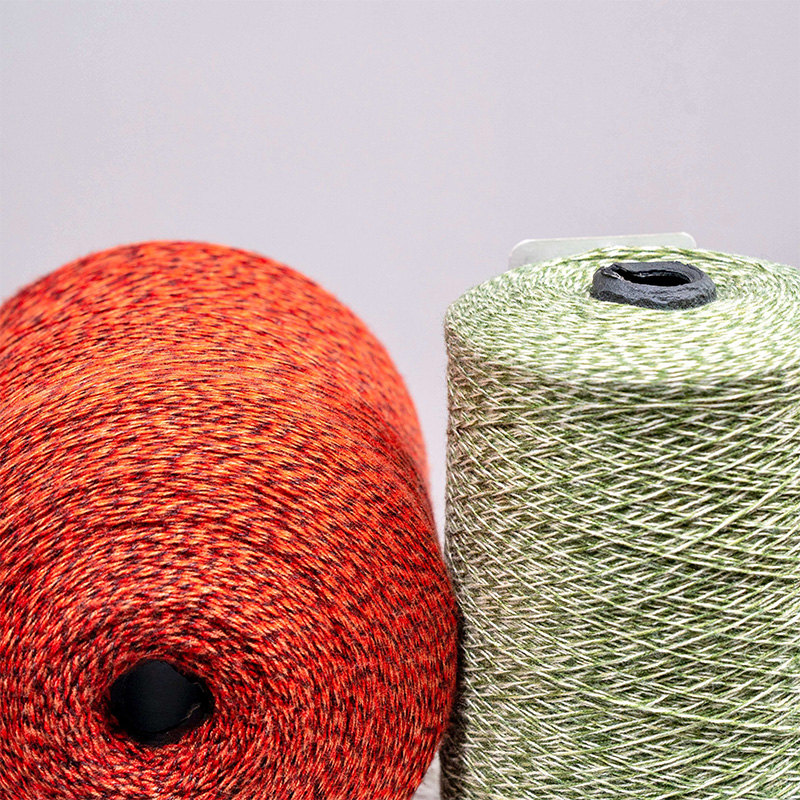
Many blended fabrics also rely on advanced yarn construction. Melange blended yarn techniques used in cotton blend production create heathered, multi-tonal effects while blending fibers at the raw stock level — a method that yields both visual depth and performance consistency.
Key Properties and Performance Benefits
Cotton blend materials are engineered around a set of trade-offs. Here is how the most important performance attributes play out in practice.
| Property | Cotton-Polyester | Cotton-Elastane | Cotton-Modal / Lyocell | Cotton-Linen |
|---|---|---|---|---|
| Breathability | Moderate | Good | Excellent | Excellent |
| Stretch | Low | High | Low–Moderate | Low |
| Durability | High | Moderate–High | Moderate | High |
| Wrinkle Resistance | High | Moderate | Moderate | Low |
| Softness | Moderate | High | Very High | Moderate |
| Moisture Management | Moderate | Good | Excellent | Good |
Fiber quality at the source has a direct bearing on these outcomes. Research on how cotton fiber quality shapes yarn and finished fabric performance consistently shows that longer, stronger, and more uniform cotton fibers produce blended yarns with superior evenness and tensile strength — which translates directly into a more consistent, durable end fabric. Processing also matters: mercerized cotton yarn and its enhanced surface properties — greater luster, improved dye uptake, and higher tensile strength — can significantly elevate the performance of a finished cotton blend when applied before or after blending.
Shrink and wash resistance is one of the most commercially relevant benefits. Pure cotton can shrink 3–5% after the first wash; blending with even 20–30% polyester reduces that figure substantially, extending garment lifespan and reducing returns for apparel brands.
Cotton Blend vs. 100% Cotton: A Practical Comparison
Pure cotton is not being replaced — it remains the benchmark for breathability, natural feel, and skin compatibility. But it comes with real-world limitations that blends address directly. The choice between them depends on end-use priorities.
- Breathability: Pure cotton leads, but high-cotton-content blends (70%+) deliver comparable performance for most everyday wear scenarios.
- Durability: Cotton blends with polyester or linen outlast pure cotton significantly under repeated washing and abrasion, making them better suited for uniforms, workwear, or high-cycle home textile applications.
- Shape retention: Pure cotton loses shape over time. Cotton-elastane blends maintain fit far better, which is why fitted silhouettes in modern fashion almost exclusively use blended constructions.
- Care ease: Cotton blends resist wrinkles and dry faster, reducing ironing time and energy consumption — a meaningful factor in commercial laundry operations.
- Cost: Blending with synthetic fibers generally reduces material cost per kilogram, while blending with premium natural fibers (wool, linen, lyocell) may increase it. The cost-performance equation must be evaluated per application.
- Skin sensitivity: High-cotton-content blends (90%+) retain most of cotton's hypoallergenic qualities. Lower cotton ratios with synthetic fibers may cause irritation for sensitive skin types.
Where Cotton Blend Material Is Used
Cotton blend fabrics appear across virtually every textile category, and their prevalence is driven by their adaptability to different performance requirements.
Everyday Apparel: T-shirts, shirts, trousers, and casual dresses are overwhelmingly produced in cotton-polyester or cotton-modal blends. These constructions hold color well, resist pilling, and maintain their shape through repeated wear and washing cycles.
Activewear and Sportswear: Cotton-elastane and cotton-spandex blends dominate this category, providing the stretch needed for physical movement while retaining enough natural fiber content for comfort against skin. High-performance vortex-spun blended yarns engineered for activewear and workwear represent a further refinement — vortex spinning produces yarns with a smoother surface, lower pilling tendency, and superior abrasion resistance compared to conventional ring-spun blended constructions.
Workwear and Uniforms: Durability, color fastness, and ease of industrial laundering make cotton-polyester blends the standard choice for professional uniforms, medical scrubs, and industrial protective clothing.
Home Textiles: Bed linens, towels, curtains, and upholstery all utilize cotton blend constructions. Polyester blends keep sheets wrinkle-free and dimensionally stable. Cotton-linen blends bring texture and a relaxed aesthetic to table linens and decorative cushions.
Sustainable Textiles: Growing demand for eco-conscious materials has accelerated adoption of cotton blended with recycled polyester, organic lyocell, or other responsibly sourced fibers — particularly among fashion brands with sustainability commitments.
How to Choose the Right Cotton Blend for Your Project
Selecting a cotton blend is not a single decision — it is the outcome of several intersecting criteria. The following framework helps buyers and designers narrow the right specification.
- Define the primary end-use: A fitted activewear garment calls for cotton-elastane; a durable workwear fabric calls for cotton-polyester; a breathable summer shirt leans toward cotton-linen or cotton-lyocell.
- Set the cotton content floor: For skin-sensitive applications or garments positioned as "natural," maintain a minimum of 70% cotton. For performance applications where stretch or durability dominate, lower cotton ratios are acceptable.
- Consider the spinning technology: Ring-spun blended yarns offer a softer hand; vortex-spun blended yarns deliver better pilling resistance and surface uniformity. The choice of spinning method shapes the fabric as much as the fiber blend ratio itself.
- Factor in wash and care requirements: If the end product will undergo industrial laundering or frequent high-temperature washing, a higher synthetic content (30–50%) provides better dimensional stability and color retention.
- Evaluate certifications: For blends incorporating recycled fibers or organic cotton, verify relevant certifications (GOTS, GRS, OEKO-TEX) to meet downstream brand compliance requirements.
- Request test data: Before committing to a bulk order, obtain yarn or fabric test results covering tensile strength, pilling grade, color fastness, and shrinkage. These data points allow an objective comparison between suppliers and blend specifications.
Care and Maintenance Tips
Cotton blend fabrics are generally easier to care for than pure cotton, but the right approach still depends on the secondary fiber present.
- Cotton-Polyester: Machine wash in warm water (up to 40°C). Tumble dry on a low setting. Rarely needs ironing — if required, use a medium heat setting.
- Cotton-Elastane: Wash in cool water (30°C or below) to protect the elastane core and maintain stretch recovery. Avoid high-heat drying, which degrades elastane fibers over time. Lay flat or hang dry when possible.
- Cotton-Modal / Cotton-Lyocell: Gentle cycle in cool to warm water. These blends tend to be more sensitive to mechanical agitation. Tumble dry on a low setting or air dry to preserve softness and drape.
- Cotton-Linen: Can tolerate warmer wash temperatures (up to 40°C). Expect some natural wrinkling — iron while slightly damp for best results. Air drying is preferable to tumble drying.
- General rule: Always check the garment label. A cool gentle cycle is the safest default for any cotton blend. Avoid chlorine bleach on colored blends, as it accelerates fiber degradation and color loss.
Proper care extends the service life of any cotton blend fabric, preserving both its performance properties and appearance over hundreds of wash cycles — a key consideration for end consumers and institutional buyers alike.
CONTACT US
If you need to view WANTENG color chart, get a quote, or have questions, we invite you to contact us by filling out the form below.

ABOUT
CONTACT US
-
 Shengze Town, Tanqiu Village, Unit 6,7, Suzhou, Jiangsu, China.
-
 +86-18862359999
+86-13819413769 -
 sales@wjwtbf.com
madeline0831@vip.163.com
Copyright © Wujiang Wanteng Baofu Textile Co., Ltd. All Rights Reserved.
 Wholesale Knitting Yarn Manufacturers